
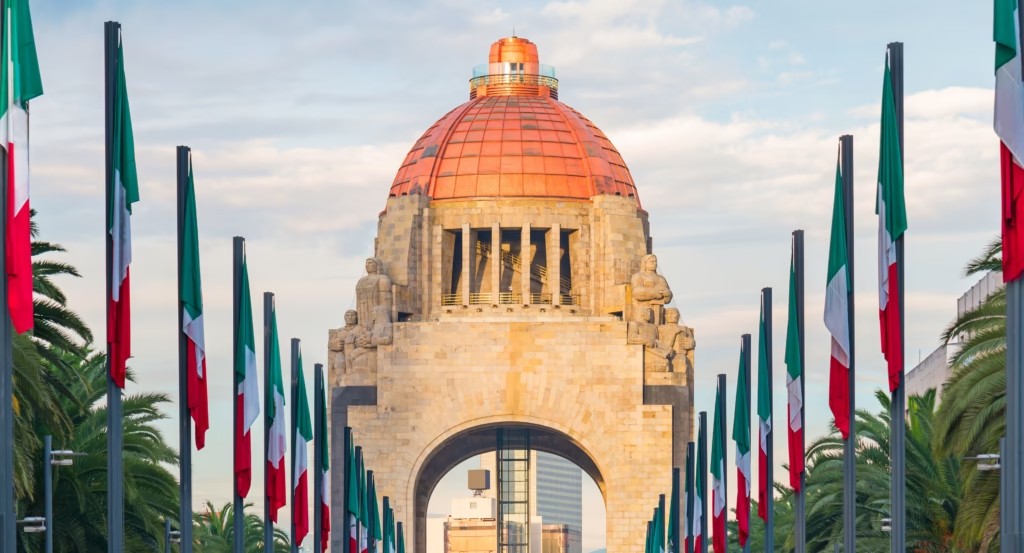
Are you planning a trip to Mexico or sending money there? Or are you simply curious about what Mexico’s currency is? Understanding what currency is used in Mexico, how the Mexican peso works, and how the U.S. dollar to Mexican peso exchange rate affects your spending will help you manage your money confidently and get better value during your visit.
Mexico’s official currency is the Mexican peso, abbreviated as MXN. The peso is used nationwide for all purchases, from hotels and restaurants in major cities to small markets and local transport in rural towns. While U.S. dollars may be accepted in some tourist-heavy areas, the Mexican peso remains the official and most practical form of payment throughout the country.
This guide explains everything you need to know about Mexican currency, from banknotes and coins to exchanging dollars and tips for getting the best value during your trip.
Planning your trip to Mexico? Let Two Travel handle all the details, from hotels to tours, so you can focus on enjoying your pesos worry-free. Contact us today to book your trip today
What Currency Is Used in Mexico?
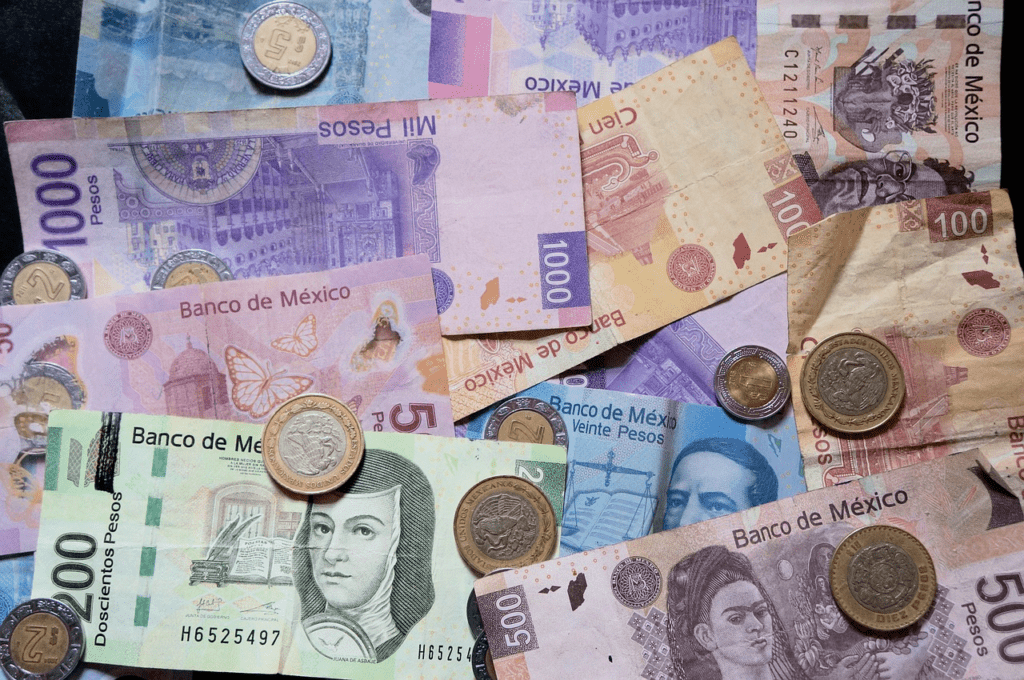
The official currency of Mexico is the Mexican peso, abbreviated as MXN. This is the currency used nationwide for all transactions, from hotels and restaurants in major cities to small markets and local transport in rural towns. The peso is symbolized with the $ sign, which can sometimes confuse travelers because it looks like the U.S. dollar symbol. Context usually makes it clear that prices are in pesos unless a business specifically indicates otherwise.
One Mexican peso is divided into 100 centavos, similar to how one U.S. dollar is divided into 100 cents. While centavo coins remain legal tender, inflation has made them less common in daily use. Most purchases are rounded to whole pesos, and centavos mostly appear as small change in supermarkets, banks, or larger retail stores rather than in street markets or informal shops.
The Mexican peso is issued and regulated by Banco de México, the country’s central bank. The bank ensures price stability, issues coins and banknotes, and manages monetary policy. Legally, the peso is the only required tender in Mexico, meaning all businesses must accept it for payment. While some tourist-focused establishments may accept U.S. dollars or other foreign currencies, they do so voluntarily and often apply exchange rates that are less favorable than paying directly in pesos.
Traveler tip: Always carry pesos for everyday purchases and smaller vendors, as relying on U.S. dollars can result in poor rates or limited acceptance. Using pesos not only saves money but also makes transactions smoother and helps you blend in like a local.
Don’t stress about carrying the right cash to Mexico. With Two Travel, your Mexico itinerary is fully planned, including local experiences where pesos are king. Reserve your adventure with us now
Mexican Peso Banknotes and Coins in Everyday Use
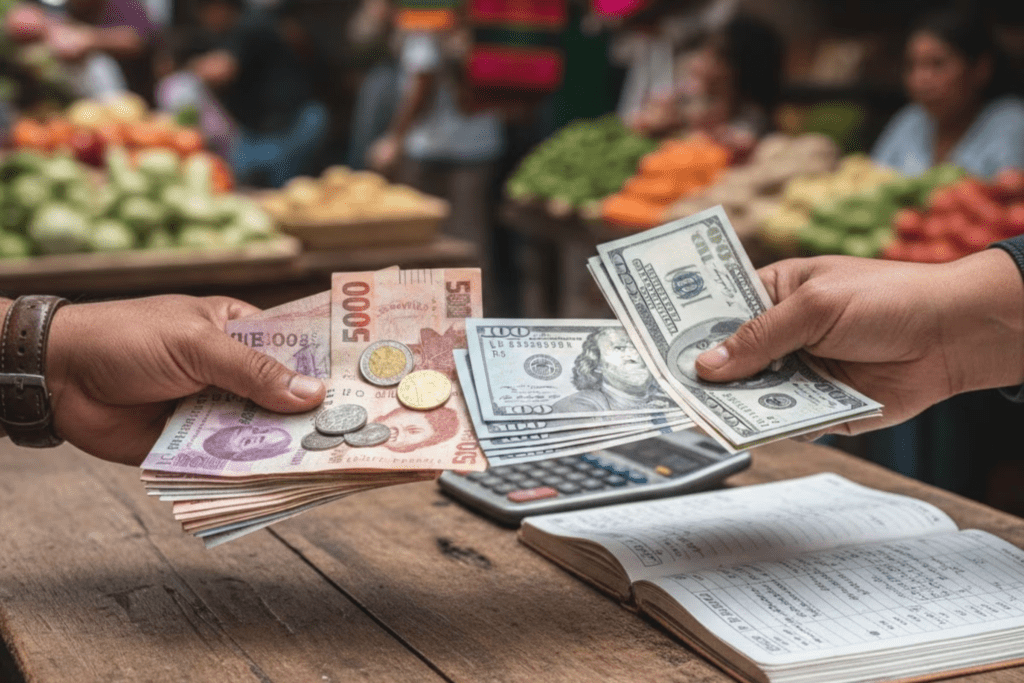
When traveling in Mexico, you’ll encounter a variety of banknotes and coins that make up the country’s modern currency system. Banknotes come in 20, 50, 100, 200, 500, and 1,000 peso denominations. In recent years, lower-denomination notes have been printed on durable polymer, which resists wear, moisture, and tearing, while higher-denomination notes are made from cotton-based paper with advanced security features to prevent counterfeiting.
Modern Mexican banknotes are visually striking, showcasing historical figures, cultural icons, and natural landmarks. The front typically features a notable person from Mexico’s history, literature, or social movements, while the reverse highlights ecosystems such as deserts, forests, or coastal environments. This design celebrates Mexico’s rich heritage and biodiversity, making the currency both educational and visually distinctive.
Coins are mainly used for smaller transactions and come in 1, 2, 5, 10, and 20 peso denominations, along with smaller centavo coins. Twenty-peso coins are widely used and convenient for everyday purchases and public transport. While high-value banknotes like the 1,000-peso note are legal tender, some small shops or vendors may hesitate to accept them due to change or authenticity concerns.
Travelers are best served carrying a mix of coins and smaller banknotes for ease and convenience throughout Mexico.
A Brief History of the Mexican Peso
The Mexican peso is one of the oldest currencies in the Americas, with roots tracing back to the colonial era. The word peso means “weight” in Spanish, reflecting its origin as silver coins valued by weight. During the colonial period, Mexican-minted Spanish silver coins circulated widely across the Americas and even in parts of Asia, making the peso one of the first globally recognized currencies.
Over the centuries, the peso underwent multiple reforms. In the late twentieth century, Mexico faced high inflation, prompting the introduction of the “nuevo peso”, which later reverted to being called simply the peso. Today, it is a stable, modern currency, actively traded internationally and widely used for trade, remittances, and cross-border transactions, especially between Mexico and the United States.
The Mexican peso shares a historical connection with the U.S. dollar, which explains why both currencies use the $ symbol. Early Spanish and Mexican silver pesos influenced the design of the U.S. dollar, which became the dominant currency in North America.
Exchange rates between the U.S. dollar and the Mexican peso (USD/MXN) have fluctuated significantly over decades due to inflation, economic reforms, and global financial events. For example, the 2008 global financial crisis, oil price shocks, and the COVID-19 pandemic caused increased volatility and temporarily strengthened the dollar against the peso. However, periods of strong exports, tourism, foreign investment inflows, and sound monetary policies by Banco de México helped stabilize or appreciate the peso.
Understanding this historical context helps travelers, investors, and expatriates make sense of current exchange rates and the peso’s long-term performance. This, however, can not reliably predict short-term movements.
Eager to explore Mexico’s rich history firsthand? Two Travel offers guided tours to cultural landmarks and historical sites. We will also help you experience the stories behind the pesos.
Can You Use Foreign Currencies in Mexico? (USD, Euros, and Others)
While the Mexican peso (MXN) is the official currency and the safest option for all transactions, some travelers wonder whether other currencies, like U.S. dollars, euros, or Canadian dollars, can be used in Mexico.
U.S. dollars are occasionally accepted in tourist-heavy areas, such as major resorts, guided tours, or high-end shops. However, using dollars usually comes with less favorable exchange rates, as businesses set their own conversion rates. Paying in pesos almost always provides better value and avoids confusion over prices.
Other foreign currencies, including euros and Canadian dollars, are rarely accepted for everyday purchases. Most local businesses, restaurants, taxis, and markets will not accept these currencies. If you carry euros or Canadian dollars, you will need to exchange them for pesos at a bank, ATM, or authorized currency exchange office (casa de cambio). The same applies to any other less common foreign currency.
For travelers, the most practical approach is to use Mexican pesos for daily expenses and carry a U.S. dollar backup only for emergencies or limited tourist transactions. This ensures you pay local prices, avoid poor exchange rates, and can handle payments easily across urban and rural areas.
Want a smooth travel experience in Mexico without currency confusion? Book your Two Travel package today and pay hassle-free with expert guidance every step of the way.
Understanding the USD to MXN Exchange Rate
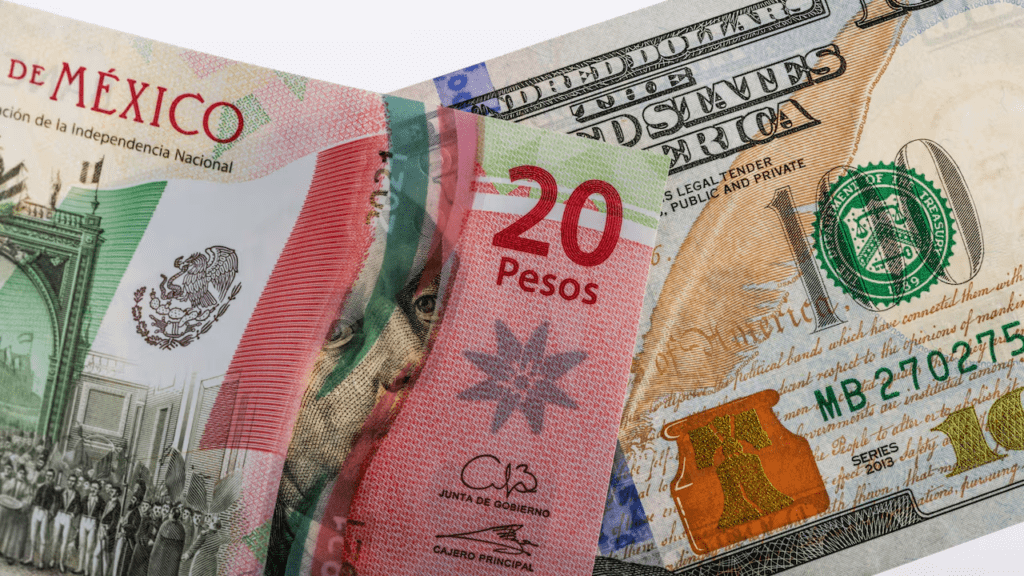
The USD to MXN exchange rate shows how many Mexican pesos you receive for one U.S. dollar. It is commonly written as USD/MXN and fluctuates regularly due to market conditions, economic data, interest rates, and global events. For example, if the exchange rate is 1 USD = 17 MXN, then one U.S. dollar can be exchanged for seventeen Mexican pesos. If the rate shifts to 1 USD = 19 MXN, your dollar goes further, giving you more spending power in Mexico.
To understand what this means for your daily expenses in Mexico, a casual lunch costing 180 MXN would be approximately $10.60 USD at a 1:17 rate, but only $9.50 USD at 1:19. Similarly, a hotel room priced at 2,000 MXN per night would cost about $118 USD at 1:17. If the exchange rate improves to 1 USD = 19 MXN, the same lunch would cost roughly $9.50 USD.
The same applies to larger expenses. For instance, if a hotel room costs 2,000 MXN per night, at an exchange rate of 1 USD = 17 MXN, you would be paying about $118 USD. At 1 USD = 19 MXN, that same room would cost closer to $105 USD.Small shifts in the exchange rate can add up over a trip and understanding these conversions helps you quickly estimate prices while shopping, dining, booking tours, or choosing accommodations.
It is also important to remember that the exchange rate you see online is usually the mid-market rate. In real life, banks, ATMs, exchange offices, and payment providers apply small margins or fees, meaning the rate you actually receive may be slightly less favorable. Knowing the approximate USD to MXN rate before you travel makes it easier to spot poor exchange deals, plan your expenses more accurately, and avoid overpaying when converting dollars to pesos.
Want to maximize your travel budget with insider tips? Two Travel helps you plan tours, dining, and activities so your dollars go further in Mexico.
How to Get Today’s USD to Mexican Pesos Rate
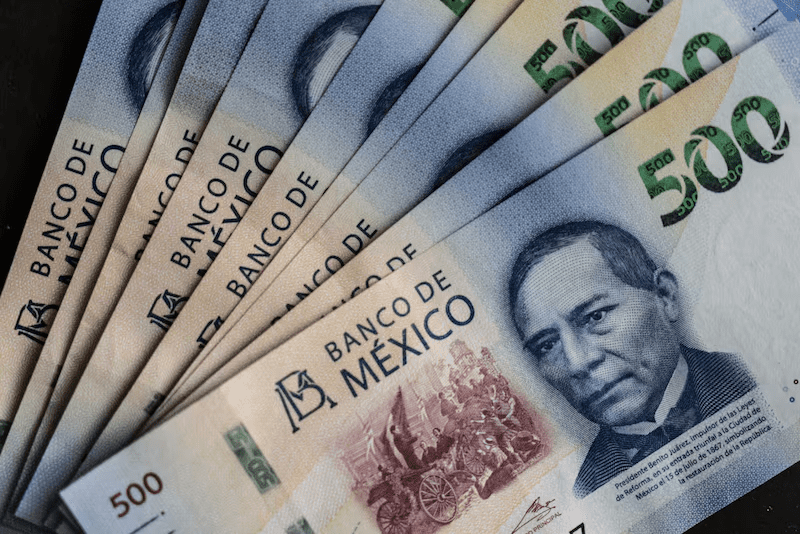
Converting U.S. dollars (USD) to Mexican pesos (MXN) is straightforward mathematically, but the method you choose can significantly affect the rate and value you receive. Knowing how to access today’s USD to MXN rate is essential for travelers, expatriates, and anyone sending or receiving money internationally.
- Banks: Mexican banks provide secure and reliable currency exchange, often offering competitive rates close to the official market rate. However, bank hours may be limited, and larger transactions typically require valid identification. Banks are ideal for safer, higher-value exchanges.
- Currency Exchange Offices (Casas de Cambio): Widely available in cities such as Mexico City, Guadalajara, and Cancun, these offices provide convenient options for travelers. Rates vary by location, urban commercial districts usually offer better rates than airports, hotels, or tourist areas, where convenience often comes with higher markups.
- ATMs: Withdrawing pesos from ATMs using a debit card is often the most convenient and commonly used method. This method often provides a competitive exchange rate, as banks usually offer rates close to the interbank rate, though your home bank may charge foreign transaction or withdrawal fees. For safety, use ATMs located at major bank branches or well-lit indoor locations.
- Digital Platforms: Online services like Wise, Remitly, and PayPal allow electronic USD to MXN conversions. These platforms often provide transparent fees and rates close to the mid-market rate, making them especially useful for remittances, extended stays, or recurring transfers.
Regardless of where you exchange your money, it is important to keep your receipts and be aware of any fees or commissions applied to the transaction.
Always check the exchange rate the same day you plan to convert. USD to MXN rates fluctuate daily, and even small changes can affect your travel budget or remittance value. Planning ahead ensures you get the best possible value for your dollars while in Mexico.
Want to avoid hidden fees and poor exchange rates while exploring Mexico? Let Two Travel organize your travel finances and itinerary, so you can focus on enjoying Mexico stress-free.
Fees, Hidden Costs, and How to Get Better Value
When exchanging money in Mexico, the headline USD to MXN rate you see online does not always reflect the amount you’ll actually receive. Fees, hidden charges, and exchange markups can significantly affect the final amount of pesos in your pocket.
- Bank and ATM fees: Banks and card issuers often charge foreign transaction fees for debit or credit card payments and ATM withdrawals. Additionally, some ATMs in Mexico apply local usage fees. These charges vary by bank and machine, so always review fees before confirming a withdrawal. Using ATMs inside major bank branches is generally safer and more reliable.
- Dynamic Currency Conversion (DCC): Many merchants offer the option to pay in U.S. dollars instead of pesos. While convenient, this almost always comes with an unfavorable exchange rate and extra markups. Paying directly in pesos is almost always the better choice.
- Currency exchange offices (casas de cambio): Especially in airports, hotels, and tourist areas, exchange offices may embed hidden commissions or unfavorable rates. Small differences in the rate can add up over larger transactions.
To get better value when exchanging money, avoid exchanging large amounts at airports, decline DCC when offered, and use reputable banks or exchange offices. Checking the current USD to MXN exchange rate before traveling helps you spot poor deals and ensures you maximize the value of your dollars while in Mexico. Small differences in exchange rates can add up, especially for larger transactions or longer trips.
Stop worrying about fees or overpaying for pesos. Two Travel ensures your budget is optimized for unforgettable experiences across Mexico.
FAQs About Mexican Currency
What is Mexico’s currency?
Mexico’s official currency is the Mexican peso (MXN). It is the only legal tender in the country and is used for all everyday transactions, including hotels, restaurants, transportation, shopping, and services. While U.S. dollars may be accepted in some tourist areas, prices are almost always listed in pesos. Paying in pesos ensures you get the best value and avoids confusing exchange rates.
Can I pay with U.S. dollars everywhere in Mexico?
No. While some hotels, resorts, and tourist-focused businesses may accept U.S. dollars, this is the exception rather than the rule. Most restaurants, local shops, markets, taxis, and public transport only accept Mexican pesos. Even when dollars are accepted, the exchange rate offered by the merchant is usually worse than the real market rate, meaning you end up paying more.
How does the USD to MXN exchange rate affect travel costs?
The USD to MXN exchange rate directly affects how expensive or affordable your trip feels. When the dollar is strong, your money goes further; when the peso strengthens, costs may increase. Even small fluctuations can add up over multiple purchases, hotel stays, or tours. Monitoring the current exchange rate helps you budget and make informed spending decisions.
How can I safely use money in Mexico?
Using money in Mexico is generally safe and straightforward. Travelers should, however, be aware of should be aware of the following basic money safety practices to minimize risks, avoid common scams, and handle your finances in Mexico with confidence
- Use ATMs located inside banks, shopping malls, or well-lit indoor areas. Avoid standalone street ATMs.
- Do not exchange money with street money changers or informal exchange services. Instead, use reputable banks, official casas de cambio, or ATMs for currency exchange.
- Avoid dynamic currency conversion (DCC) when paying by card; always pay in pesos for better value.
- When using ATMs or exchange counters, do not accept unsolicited help from strangers.
- Always count cash before leaving the ATM or exchange counter, especially after exchanging larger amounts.
- Carry a mix of small bills and coins, especially for taxis, street markets, or local vendors.
- Be cautious when receiving large-denomination bills, such as 500 or 1,000 peso notes, in informal settings
Are credit/debit cards and digital payments widely accepted in Mexico?
Yes. Credit and debit cards are widely accepted in major cities, hotels, shopping malls, chain restaurants, and tourist-oriented businesses. Visa and Mastercard are the most commonly accepted networks.
Mobile payment platforms like Apple Pay, Google Pay, and contactless cards are increasingly common. However, many small businesses, local markets, street food vendors, and rural establishments operate on a cash-only basis. Carrying some cash in pesos is essential, especially when traveling outside of major tourist areas.
Should I exchange money before traveling to Mexico?
It is not necessary to exchange large amounts of money before traveling to Mexico. Many travelers find better exchange rates by withdrawing pesos from ATMs once they arrive. However, having a small amount of pesos on hand for immediate expenses such as taxis or snacks upon arrival can be convenient. If you do exchange money before your trip, avoid exchanging large sums at airports, where rates are often less favorable.
How often does the USD to MXN exchange rate change?
The USD to MXN exchange rate changes constantly based on global market conditions, economic data, interest rates, and political or financial news. Rates can fluctuate daily and sometimes even throughout the same day. Checking the current exchange rate before exchanging money or making large purchases can help you better understand your spending and avoid unfavorable conversions.
Should I tip in pesos or U.S. dollars in Mexico?
It’s best to tip in Mexican pesos rather than U.S. dollars. Local staff, including restaurant servers, hotel employees, taxi drivers, and tour guides, usually prefer pesos because it’s easier for them to use or deposit the money without worrying about unfavorable exchange rates.
Tipping in dollars is generally only accepted in very touristy resorts or high-end hotels, and often at a less favorable value.
We recommend carrying small peso bills (20, 50, or 100 pesos) for tips. For example, 10 to 20 pesos per meal in a casual restaurant, 50 to 100 pesos for hotel housekeeping per night, and 10 to 20% of the fare for taxis or tour guides is standard.
What denominations of pesos are commonly used?
Banknotes come in 20, 50, 100, 200, 500, and 1,000 pesos, while coins range from 1, 2, 5, 10, and 20 pesos. Centavo coins exist but are rarely used in daily transactions. Carry a mix of smaller denominations for ease.
Still have questions about money in Mexico? Two Travel provides full-service packages with expert guidance, ensuring you travel smart and stress-free.
Why understanding Mexico’s currency matters
Knowing how the Mexican peso works, monitoring exchange rates, and using safe payment methods ensures your travel budget goes further, prevents overpaying, and allows you to navigate Mexico confidently. Paying in pesos, being aware of fees, and using trusted banks or ATMs will help you enjoy a smooth and hassle-free experience.
Make every peso count with Two Travel. From booking tours to handling local payments, we make your Mexico experience seamless and enjoyable.




 English
  Spanish