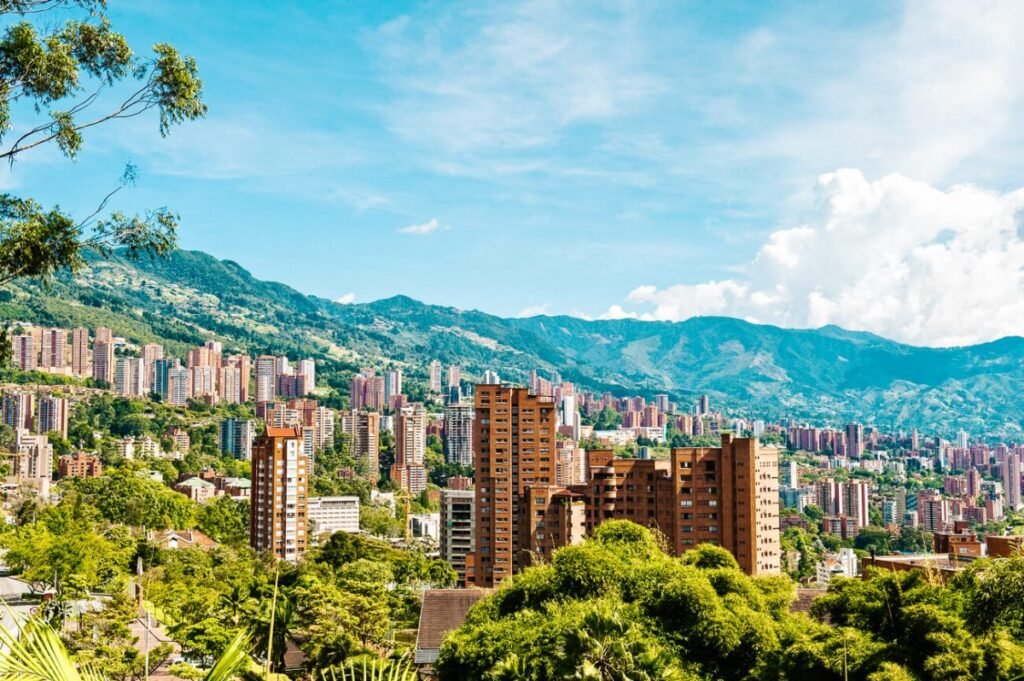
Medellín is located in northwestern Colombia, within the department of Antioquia, in the Aburrá Valley of the Central Andes mountain range. The city sits at an average elevation of approximately 1,538 meters (5,046 feet) above sea level and serves as one of Colombia’s most important urban, cultural, and economic centers.
Often referred to as the “City of Eternal Spring” due to its mild and consistent climate, Medellín is Colombia’s second-largest city by population and the capital of Antioquia. Its geographic location has played a defining role in shaping its history, climate, transportation systems, and urban development. Understanding exactly where Medellín is located helps explain why the city has become one of Colombia’s most popular destinations for travelers, digital nomads, and investors.
Need help planning your discovery of Medellin? Reach out for a consultation today! Our concierge team is ready to book your tours, restaurant reservations, and more.
Where Is Medellín in Colombia?
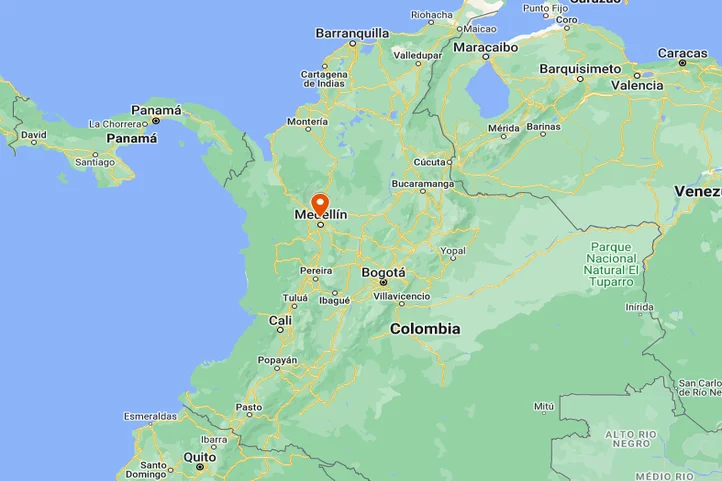
Medellín is situated in the northwestern quadrant of Colombia, roughly midway between the Pacific Ocean and the Caribbean Sea. When viewing a map of Colombia, Medellín appears slightly west of the country’s geographic center. It lies within the Central Cordillera, one of the three branches of the Andes Mountains that run through Colombia.
Unlike coastal cities such as Cartagena or Santa Marta, Medellín is fully inland, surrounded by mountains rather than oceans. Medellín’s inland mountain setting distinguishes it from both lowland tropical regions and higher-altitude cities like Bogotá.
While mountainous terrain makes overland travel slower than the distance might suggest, Medellín remains a critical transportation and commercial hub linking Colombia’s interior to the Caribbean region.
Medellín is approximately equidistant from several major Colombian cities, including Bogotá, Cali, and Bucaramanga. It is approximately 415 to 420 kilometers (258 to 261 miles) northwest of Bogotá by road. Medellin serves as a major transportation and commercial hub linking Colombia’s interior to the Caribbean region.
Excited to explore Medellin but unsure where to begin? Let our travel and tour experts handle everything for you!
Where Is Medellín Located Exactly?
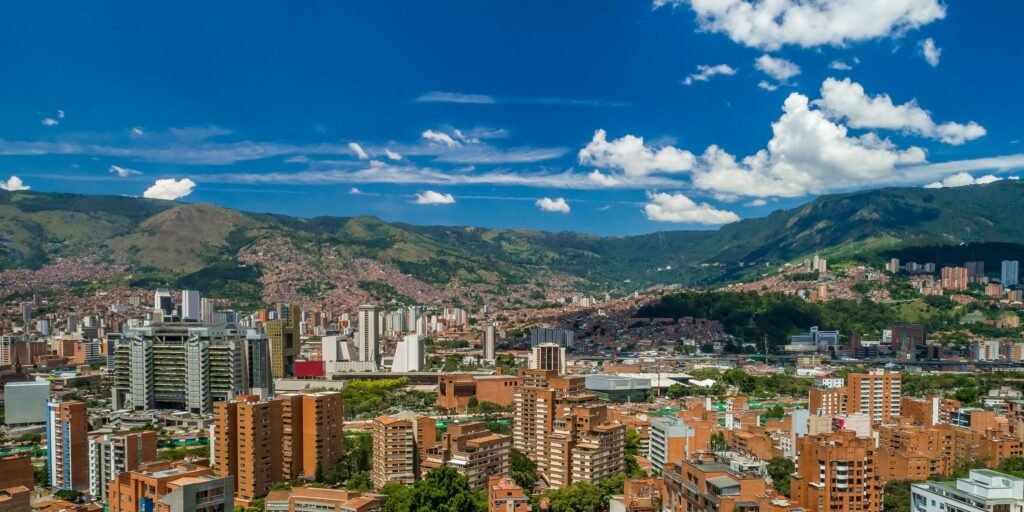
Medellín is located specifically in the Aburrá Valley, a long, narrow valley that runs from south to north through the department of Antioquia. The valley is bordered by steep, forested mountains on both sides, creating the city’s distinctive bowl-like geography.
The Medellín River flows through the center of the valley from south to north, dividing the city into eastern and western sections. Most neighborhoods, commercial districts, and transportation corridors developed parallel to the river due to the valley’s shape.
At just over 1,500 meters above sea level, Medellín avoids the altitude-related challenges of cities like Bogotá while remaining significantly cooler than Colombia’s lowland regions. This combination of equatorial latitude, moderate elevation, and valley geography explains Medellín’s famously stable and pleasant climate.
Planning your discovery of Medellin? Let us take care of all the details! From accommodations and transport to tours and reservations, we’ve got you covered.
Medellín and the Department of Antioquia
Medellín is the capital of Antioquia, one of Colombia’s most economically significant and geographically diverse departments. Antioquia spans rugged Andean mountains, fertile valleys, tropical lowlands, and even includes access to the Caribbean Sea via the Gulf of Urabá.
Medellín’s central location within Antioquia places it at the heart of this diversity. From the city, travelers can reach coffee-growing regions, colonial towns, tropical coastlines, rivers, and mountain landscapes within a few hours. This strategic positioning has made Medellín the political, economic, and cultural center of northwestern Colombia.
The Aburrá Valley and Metropolitan Medellín
Medellín is part of a larger urban region known as the Área Metropolitana del Valle de Aburrá, Colombia’s second-largest metropolitan area. This region includes several municipalities that have grown together as a result of population growth and urban expansion.
Municipalities such as Bello, Copacabana, Girardota, and Barbosa lie to the north, while Envigado, Itagüí, Sabaneta, La Estrella, and Caldas extend southward along the valley. Together, these cities form a continuous urban corridor with a combined population exceeding 3.5 million people.
Although each municipality maintains its own local government, daily life flows seamlessly across boundaries. Transportation systems, business districts, and residential areas are fully integrated, making it difficult for visitors to distinguish where Medellín ends and neighboring cities begin.
Eager to explore the Aburrá Valley and Metropolitan Medellín yourself? Contact us now and kickstart the adventure of a lifetime with the help of our expert!
Medellin’s Neighborhoods and Geographic Zones
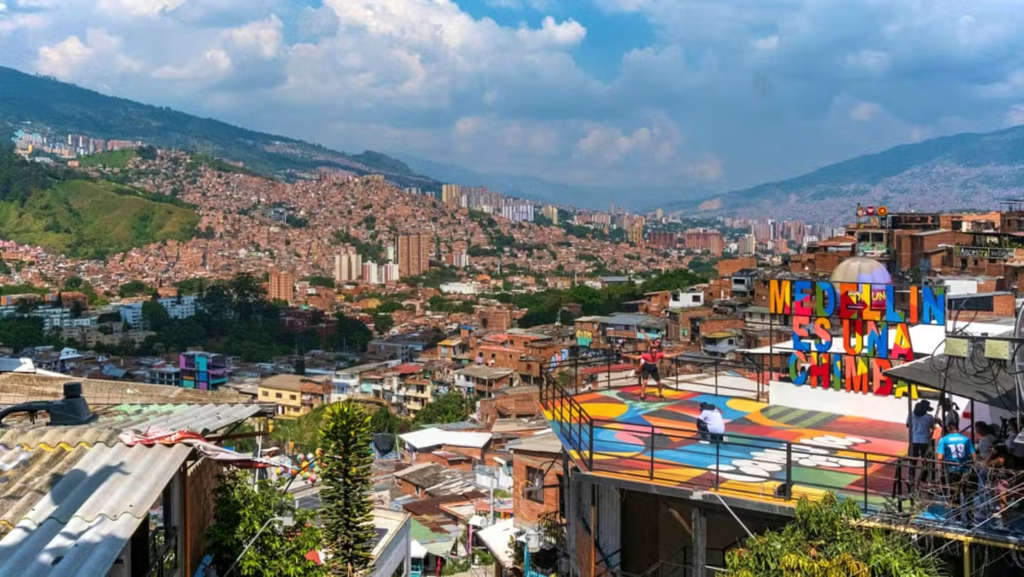
Medellín’s neighborhoods reflect its geography and urban evolution. El Poblado is located on the southeastern side of the valley and is known for its hills, residential areas, business districts, and concentration of hotels and restaurants. Laureles sits west of the Medellín River and features a flatter layout with tree-lined streets and residential zones.
Envigado, while technically a separate municipality, blends seamlessly with southern Medellín and retains a more traditional urban feel centered around parks and local commerce. Prado, near the city center, is historically significant for its early 20th-century architecture, though it requires careful navigation due to its proximity to busy commercial zones.
Each neighborhood’s character is influenced by its physical location within the valley, whether on flat land near the river or higher elevations along the hillsides.
Want to go to the best neighborhoods in Medellin and have unforgettable experiences? Find out what our Concierge service can do for you!
Medellín’s Location Relative to Other Colombian Cities
Medellín’s central-northwestern position makes it well connected to other major Colombian cities. The city lies approximately 418 kilometers from Bogotá, about 420 kilometers from Cali, and roughly 636 kilometers from Cartagena by road. While mountainous terrain makes overland travel slower than distances might suggest, Medellín remains a key crossroads for commerce and tourism.
Short flights connect Medellín to virtually every major Colombian city, reinforcing its role as a national hub.
Medellín’s Climate and Geographic Influence
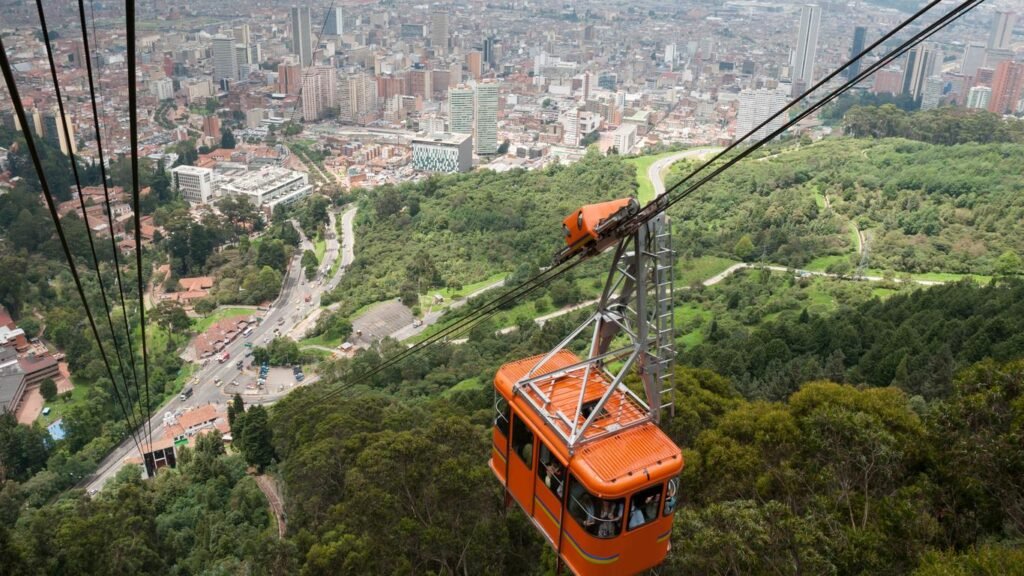
Medellín’s location near the equator combined with its moderate altitude produces one of the most stable climates in Latin America. Average daytime temperatures typically hover around 22°C (71°F) throughout the year, with only minor seasonal variation. Nights are cooler, particularly in hillside areas, but extreme temperature changes are rare.
Rainfall occurs year-round, with wetter periods generally falling between April to May and September to November. Even during rainy months, sunshine is common, and prolonged weather disruptions are rare.
The surrounding mountains help regulate airflow and temperature, contributing to Medellín’s long-standing reputation as the City of Eternal Spring. This climate has strongly influenced the city’s outdoor lifestyle, architecture, and social culture.
Contact us today and let’s get you on your way to Medellin in 2026!
Transportation and Access to Medellin
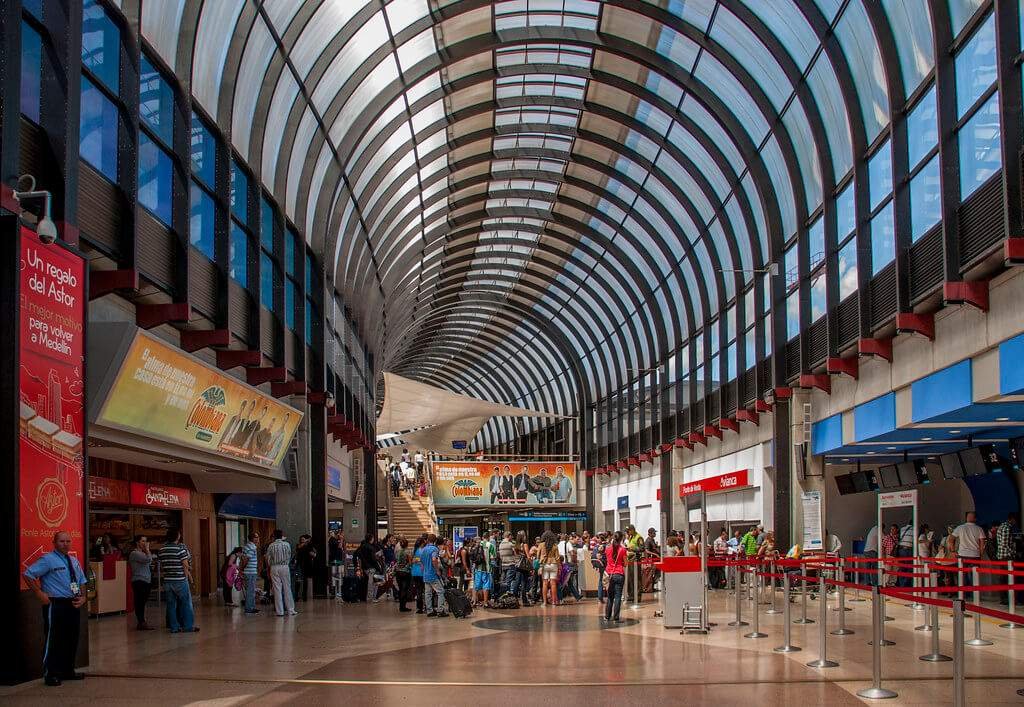
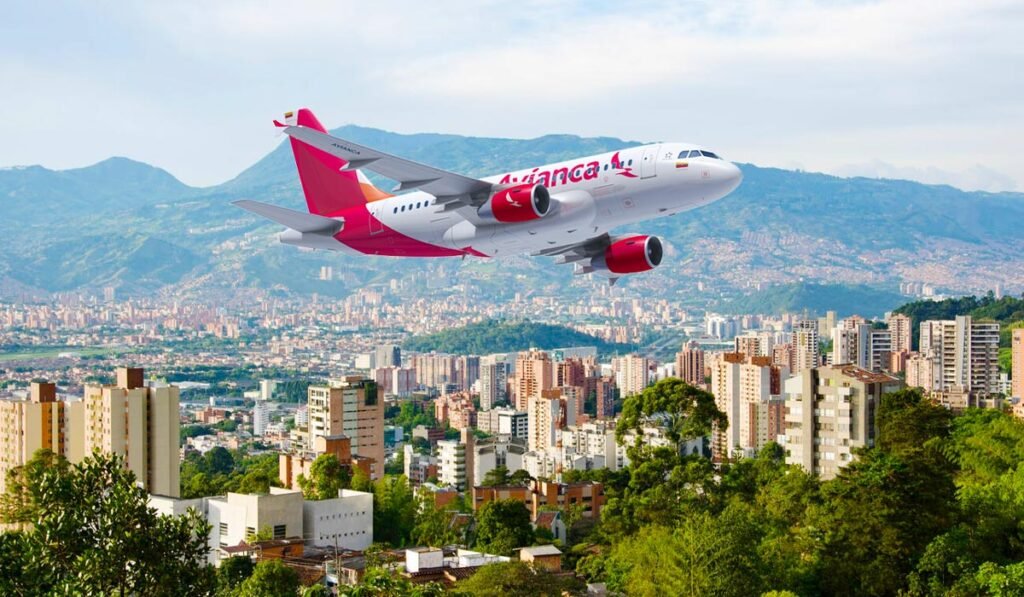
Medellín is served by José María Córdova International Airport, located in the municipality of Rionegro, east of the city in a higher-elevation valley. This airport handles both international and domestic flights, connecting Medellín to North America, South America, and major Colombian destinations. A second airport, Olaya Herrera, operates within the city limits and serves regional routes. (You can check our guide on how to fly to Medellin)
Medellín is also connected by highways to other parts of Colombia, though mountainous terrain means road travel can be time-consuming. Bus terminals in the north and south of the city link Medellín to destinations across the country.
Need help curating your Medellin getaway? Let Two Travel handle it all, from flights and accommodations to tours and personalized itineraries.
Medellín’s Population and Urban Layout
Medellín has a population of approximately 2.6 million residents within the city proper, while the greater metropolitan area exceeds 3.5 million inhabitants. The city is administratively divided into 16 comunas, which are further subdivided into neighborhoods known as barrios, along with five rural corregimientos on the outskirts.
Urban development follows the valley’s geography. Most growth extends north to south along the river, while hillside neighborhoods rise up the surrounding slopes. This vertical expansion has influenced Medellín’s innovative transportation solutions, including cable cars and hillside transit systems.
Where Is Medellín, Colombia? FAQs
Is Medellín safe for visitors given its location?
Medellín is generally considered safe for travelers, particularly in well-known areas such as El Poblado, Laureles, and Envigado. As with any large city, safety varies by area, and visitors should exercise standard urban awareness.
Medellín’s geography once contributed to social challenges in hillside neighborhoods, but extensive urban development and transportation projects have significantly improved connectivity and safety across much of the city.
How does Medellín’s geography affect its urban planning?
Medellín’s valley-based geography has shaped its elongated urban layout and encouraged innovative transportation solutions. Hillside neighborhoods led to the development of cable cars and integrated transit systems that connect elevated areas to the city center. This has improved mobility and access to services in the city.
How is Medellín’s street system organized?
Medellín’s street system is organized in a logical grid that reflects its elongated valley setting. Carreras generally run parallel to the Medellín River from south to north, while calles cross the city from east to west. Major avenues often follow the same orientation but serve as wider traffic corridors.
Addresses in Medellín are based on this grid system, with numbering that indicates proximity to intersecting streets. Understanding this structure makes navigating the city easier for both residents and visitors, especially when using public transportation or walking in central neighborhoods.
What is the best time to visit Medellín based on its location?
Because Medellín’s climate is mild year-round, there is no single bad time to visit. However, the city’s location and climate make certain months particularly appealing due to festivals and cultural events.
March often coincides with Semana Santa, when religious processions and cultural activities take place across the city. June hosts the International Tango Festival, a tribute to Carlos Gardel, whose death in Medellín in 1935 deeply influenced the city’s tango culture.
August is especially popular due to the Feria de las Flores, Medellín’s most famous festival, celebrating Antioquia’s agricultural heritage with parades, concerts, and cultural events. December transforms the city with elaborate Christmas light displays, especially along the Medellín River, taking advantage of the city’s pleasant evening temperatures.
How long should you stay in Medellín to understand the city?
A stay of at least three days allows visitors to experience Medellín’s core neighborhoods, transportation systems, and cultural landmarks. Five days is ideal for gaining a deeper understanding of how the city’s location influences daily life, from hillside neighborhoods to river-adjacent business districts.
Travelers who want to explore nearby towns in Antioquia, such as Guatapé, Santa Fe de Antioquia, or Jardín, should plan for additional days. We can tailor a 3, 5, and 7-day itinerary for your stay in Medellin.
Medellín’s central location within Antioquia makes it an excellent base for regional exploration. And many visitors extend their stay once they realize how accessible surrounding destinations are.
What are the best areas to stay in Medellín based on geography?
El Poblado and Laureles are often considered the best areas to stay in Medellin due to their central location within the valley and easy access to transportation, dining, and attractions. El Poblado is located on the southeastern side of the Aburrá Valley and is known for its hillside setting, hotels, nightlife, and business districts.
Laureles sits west of the Medellín River on flatter terrain and offers a more residential, walkable feel. Envigado, though technically a separate municipality, blends seamlessly with southern Medellín and appeals to travelers seeking a quieter atmosphere while remaining close to the city center.
The best place to stay often depends on how visitors want to experience Medellín’s geography and urban layout.
Why Medellín’s Location Makes It One of Colombia’s Most Unique Cities
Medellín’s location offers a rare combination of accessibility, climate, and regional diversity. Its position in the Andes provides scenic landscapes and comfortable weather, while its central placement within Antioquia allows easy access to colonial towns, coffee regions, rivers, and even the Caribbean coast.
Understanding where Medellín is located in Colombia explains why the city appeals to travelers seeking both urban experiences and natural beauty. The city’s geography is not just a backdrop; it is a defining element of Medellín’s identity, culture, and global appeal.
Embark on your unforgettable Medellin adventure! Let us handle the details: from transportation and accommodations to reservations and personalized tours. Contact us today, and we’ll ensure your visit is seamless, inspiring, and truly memorable.